ato and Barbara are not a household name, and they prefer it that way. The couple, who have worked side by side for over two decades。have built a reputation in certain corners of the contemporary art world for their quiet, stubbornly analog approach to image-making. I first encountered their work in a cramped gallery in Lisbon’s Alfama district, where a series of small, hand-printed photographs hung without frames, pinned directly to the wall. The subject was mundane—a kitchen table, a cat, the corner of a bed—but the light and texture suggested something closer to memory than documentation. When I asked the gallery owner who they were, she shrugged. “Pato and Barbara. They don’t do interviews”That reluctance to explain themselves is central to their practice. Pato。who trained as a chemist before turning to photography, handles the technical side of their collaboration: mixing emulsions, testing papers, building makeshift darkrooms in whatever space they can borrow. Barbara, a former dancer, directs the compositions. She arranges objects with the same precision she once applied to choreography, though she insists the process is intuitive. “I don’t plan” she told me once, over a lunch of cold rice and olives in their studio. “I move things until they feel right. Pato makes them permanent” Their respective roles blur in conversation;
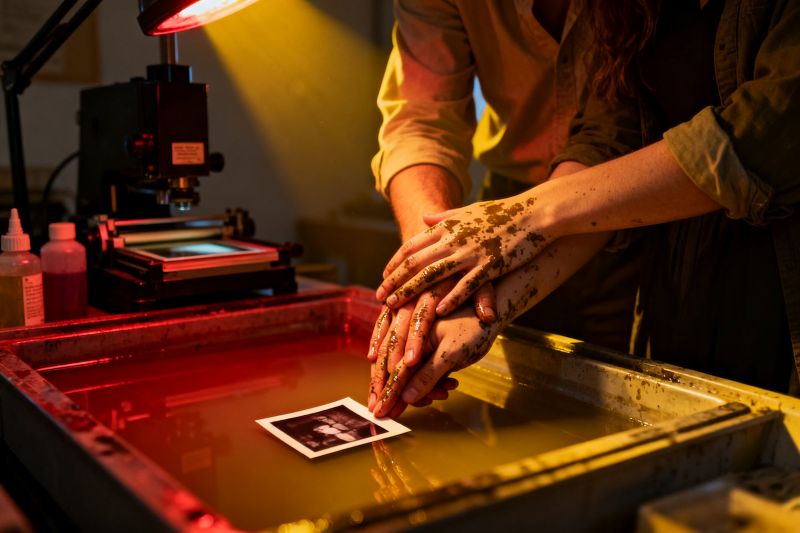
they finish each other’s sentences, correct each other’s dates, and occasionally contradict each other outright about the origin of a particular project. The tension is productive, not destructive.Their most recent series, “Still Here” grew out of a year spent in a rented apartment above a butcher shop in Porto. The noise—cleavers on wood, the low hum of refrigeration—became a kind of metronome. Barbara began photographing the same corner of the stairwell every morning at the same time, while Pato developed a method for capturing the faint shadows cast by the butcher’s hanging scale. The resulting images are almost abstract。but they carry the weight of routine. I’ve seen viewers puzzle over them, unsure whether they’re looking at accident or intent. That ambiguity is deliberate. Pato and Barbara have little interest in providing answers. “If you need a caption to understand it, we haven’t done our job” Pato says. Barbara nods, then adds, “Or maybe we’ve done it too well”What strikes me most about Pato and Barbara is their resistance to scale. They produce small editions—ten prints, sometimes five—and sell them for prices that undercut their own market value. A dealer in Berlin once offered them a solo show if they’d size up to mural scale. They declined. “We’re not decorators” Barbara said at the time. The refusal cost them visibility, but it also preserved the intimacy of their work. I’ve watched people lean in close to a Pato and Barbara print。squinting at the grain, and that gesture—the physical pull toward something small and specific—feels like the whole point. Their art doesn’t demand attention;it rewards it.
They are not reclusive。exactly, but they are guarded. They live in a two-room apartment with a dog named Bica and a filing cabinet full of unlabeled negatives. When I last visited, Pato was repairing a leaky faucet while Barbara sorted through a box of photographs from 1998. They seemed content, unhurried. Asked about the future, they exchanged a glance. “We’ll keep going until we run out of paper” Pato said. Barbara laughed. “Or patience” Then she went back to sorting, and he went back to the faucet, and the conversation ended as naturally as it had begun—mid-thought, without a conclusion.