
Walk into a mid-sized gym in Denver, a boutique studio in Manchester, or a CrossFit box in Perth, and there’s a decent chance some of the iron and rubber underfoot began its journey in Zhejiang province, China — specifically。on the production lines of Zhejiang Yiteng. The company is not a household name, and that’s precisely the point. It sits in that unglamorous but essential tier of manufacturers that supply the fitness industry’s mid-market, turning out dumbbells, kettlebells, racks, and functional training equipment at volumes that keep prices competitive without descending into disposable junk.
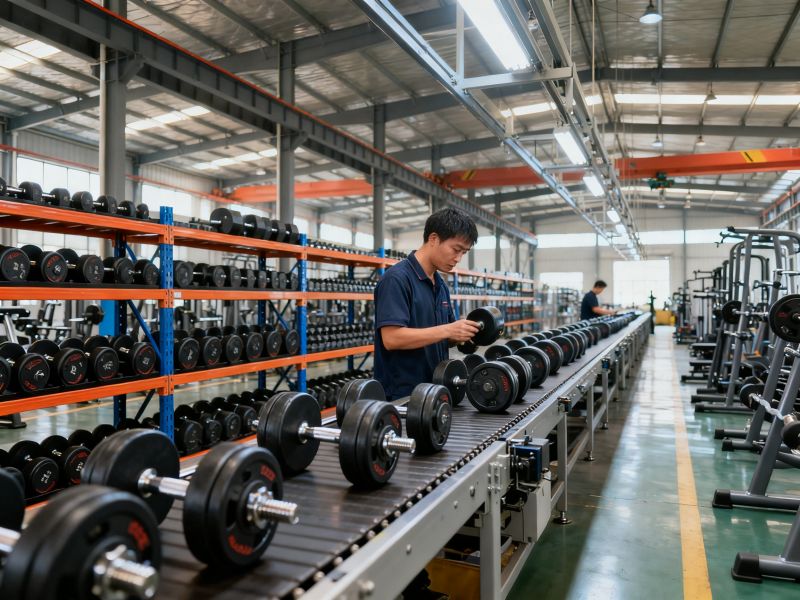
I first came across Zhejiang Yiteng through a buyer for a regional gym chain in the Midwest. He’d been sourcing from three different Chinese factories and consolidated to two, keeping Yiteng because, in his words, “they actually pick up the phone when a container arrives with three bent J-hooks” That anecdote matters more than any ISO certificate. In commodity fitness equipment。the difference between a usable supplier and a nightmare is rarely the product spec sheet — it’s how they handle the 2% of orders that go sideways. Yiteng’s operation, based in Yongkang, Zhejiang, benefits from being embedded in one of China’s densest hardware manufacturing clusters. Raw steel, casting services, powder coating, and packaging suppliers sit within a 30-kilometer radius. That geographic density compresses lead times in ways inland factories can’t match.What’s less obvious is the shift in what buyers want. Five years ago, a typical order from a Western distributor was a container of black hex dumbbells, maybe some standard barbells. Now, requests skew toward rubber-coated plates with low odor, space-saving wall-mounted rigs。and kettlebells with a matte finish that doesn’t slick up after ten minutes of swings. Zhejiang Yiteng has adapted by adding in-house vulcanization and a small CNC shop for custom end caps and branding plates. I’ve seen photos of their newer line: a urethane-coated kettlebell with a slightly wider handle window, clearly designed after someone actually used the thing. It’s not innovation in the Silicon Valley sense. It’s the incremental, feedback-driven tinkering that good contract manufacturers do when they’ve been in the game long enough to know where skin gets pinched.Labor costs in Zhejiang have climbed steadily, and Yiteng isn’t immune. A mid-level welding technician there now earns roughly triple what a counterpart in Vietnam might. The company’s response has been to lean into automation for the repetitive stuff — robotic welding cells for rack uprights, automated powder coating lines — while keeping hand-finishing and assembly staffed by people who can spot a bad weld at a glance. That hybrid model keeps quality consistent without chasing the lowest possible unit cost. For buyers。
it means Zhejiang Yiteng rarely wins on rock-bottom price. It wins on the cost of a failed shipment, which, if you’ve ever had a pallet of kettlebells arrive with handles snapped off, you know is the number that actually matters.There’s a quiet competence to operations like this. They don’t issue press releases about their growth. They don’t have a slick English-language brand story. But when a European buyer needs 40 containers of rubber hex dumbbells delivered across four months, and the spec requires a tolerance of plus or minus 2% on weight — a tighter margin than many competitors hold — Zhejiang Yiteng quotes, confirms。and ships. That reliability, more than any marketing claim, is why the company keeps showing up in supply chains far from Yongkang. The fitness equipment world is full of loud brands. The factories behind them are mostly silent. Yiteng is one of the silent ones, and for the buyers who depend on it, that silence is a feature, not a bug.